
Redondo Beach Neighbor Sources
A block lookup works only when each source is assigned its real role. The LA Assessor Portal can locate a parcel by address or AIN and Map Search can show adjacent polygons. It does not provide a verified radius or street export, and the accessible public page did not plainly establish a public owner-name field. Permits, directories, election files, and civic records add different kinds of evidence. None should be flattened into a complete household roll.
| Source | What It Shows About a Block | Access |
|---|---|---|
| Assessor Map Search | Adjacent geometry, AIN, situs, tract or lot references | Free click-by-click portal; no verified buffer tool |
| Assessor parcel record | Building, land, tax, use, and parcel facts | Address or AIN search; ownership visibility is not established |
| Redondo permits and city files | Work, applicants, contractors, meetings, and public records | Search or city request; historic coverage varies |
| Directories and phone books | Dated listed occupants or subscribers | RBPL and LOC holdings for specific years |
| Voter file | Registration information for an authorized purpose | Self-status tools or purpose-gated request; no public block browse |
| Legistar and civic groups | Public officials, meetings, and voluntary contacts | Public pages; not private member rosters |
The first rows describe property units, not the number of homes or people inside them. An owner mailing address may point elsewhere. A directory may omit an unlisted subscriber. A permit may name an applicant or contractor without identifying an occupant. Read every neighbor result as a dated, source-specific clue.
The LA County elections and voter-services site is a public entry point for election information, but its presence does not turn the voter file into a neighborhood directory.
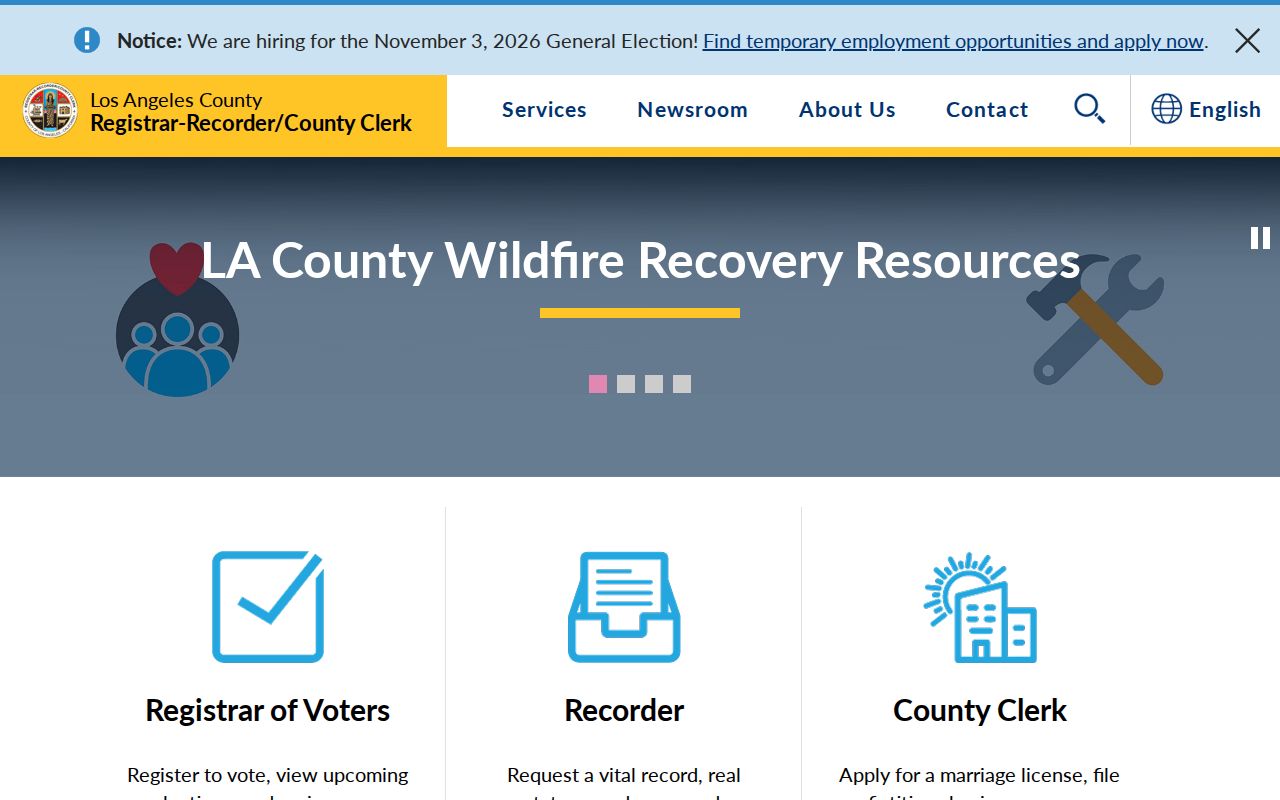
The election image belongs to a public-service workflow. It helps a person verify or request the right election record, while the block profile still needs parcel and historical sources for anything beyond that limited purpose.
Redondo Beach Neighbor Parcels
The immediate-block method starts with a known Redondo Beach address and moves outward one polygon at a time. Use the assessor's address search to find the target situs, then switch to Map Search and keep the entered spelling beside the normalized result. The research capture did not verify a radius or buffer tool, so do not describe a shaded circle as an official neighborhood result.
- Enter the address in the LA Assessor Portal and record the normalized situs and AIN.
- Open Map Search, center the target parcel, and zoom until surrounding polygons are distinct.
- Click each adjacent polygon and record its AIN, situs, tract or lot reference, and parcel status.
- Open each parcel detail and retain the same facts for every row, rather than one blended street entry.
- Mark gaps where the map, address, or legal description does not match, then verify the next source separately.
The output is a parcel worksheet. It is not a roster of Redondo Beach neighbors. For a whole named street and its complete address chain, use the Redondo Beach street directory route instead of stretching the block method past its purpose.
Corner parcels deserve special care. A single property can face another street, and a multi-unit site can involve several AINs or unit records. Preserve one row per parcel, then compare the legal description and map shape before treating two records as the same place.
Why Redondo Neighbors Are Not Parcels
Parcel data answers a land question. It can show a situs, AIN, building facts, tract and lot, assessed values, and map geometry. It cannot by itself show every person using the address. The county assessor does not establish a complete household list, and a public property page should not be read as proof that an owner occupies the parcel.
- Parcel
- A mapped land unit used for assessment and legal description.
- Situs address
- The physical location tied to the assessed parcel.
- Mailing address
- The destination used for notices, which may be different from the situs.
- Listed occupant
- A person named in a dated directory or phone book, not a guaranteed current household member.
Permits add work history and may name an applicant or contractor. Directories add a listed name for a held year. The voter file, when lawfully available, adds registration information. Legistar identifies officials and meetings. These records are distinct, and a match across two of them is stronger than a single name, but it still needs a date and a clear source label.
| Record type | Safe conclusion | Not proof of |
|---|---|---|
| Assessor map | Parcel geometry and situs | Everyone using the address |
| Permit file | Dated work and named project parties | Ownership or occupancy |
| Directory entry | Listed person at a printed time | Current presence |
| Civic record | Public role or meeting contact | Private membership |
Note: A parcel is a property unit, not a household, and an absent name is not proof that a nearby home is empty.
Redondo Beach Neighbors and Voter Rules
California My Voter Status and the LA County status tools are for a voter to verify personal registration. They are not forms for typing a nearby person's name or browsing every address on a block. The full statewide voter file is purpose-gated under Elections Code §2194. Election, political, governmental, journalistic, and scholarly uses may qualify; private browsing, advertising, marketing, Internet display, and harassment do not.
A lawful file request asks for the applicant and beneficiary, represented entity, purpose, security plan, jurisdiction, specific voter identifiers, and signature. The application is submitted in person or by mail or courier, not by email or fax. The state voter-file request instructions describe that purpose-gated route. Specific voter records require full name, date of birth, county, and residence address. Safe at Home and confidential voters remain protected.
Registration status can answer a narrow civic question when the requester is the voter or has an authorized purpose. It cannot create a public list of Redondo Beach neighbors. Elections Code §18109 also makes knowing unauthorized acquisition or use of voter data a legal risk.
Note: A voter-status result confirms a registration matter for its lawful user; it does not certify who lives on a street.
Redondo Beach Geography and Neighbors
Local names carry useful history, but they are not all municipal rolls. South Redondo includes the pier, harbor, coast, downtown, and the original townsite. North Redondo follows the Villa and Artesia corridor across the city's narrow neck. Clifton-by-the-Sea and its Avenues A through I describe an early tract. Redondo Villa tracts began in 1906 and 1907 and were annexed in 1927.
Hollywood Riviera is the clearest boundary caution. Its community identity extends into present Torrance and often uses Torrance or 90505 in a mailing line. Nearby Seaside Neighborhood Association describes a Torrance neighborhood adjoining Redondo, not a Redondo Beach municipal association. No authoritative citywide neighborhood-association roster was found. Treat a neighborhood name as geographic context, then verify the parcel and jurisdiction.
These boundaries shape neighbor research. A historic block can cross an old tract label, a modern postal identity, and a present city edge. The AIN, legal description, and parcel map are more durable than a community nickname.
Redondo Beach Neighbor Records and Rosters
Community resources add a human and civic layer without exposing a private directory. The strongest documented sources are public meeting records, the library's local-history desk, the Historical Society and Museum, and the South Bay archive. HOA rosters generally stay private. There is no verified master list that can turn every Redondo Beach neighbor association into one searchable table.
| Resource | What It Can Add | Access and Boundary |
|---|---|---|
| Redondo Legistar | Public officers, commissions, agendas, staff reports, and minutes | Public civic record; not a private member roster |
| RBPL Reference Department | Directories, newspapers, yearbooks, and local-history files | Research collection; holdings vary by year |
| Historical Society and Museum | Photographs, documents, artifacts, and historic context | 302 Flagler Lane; posted hours should be confirmed |
| CSU Dominguez Hills South Bay History Collection | Redondo brochures, directories, newspapers, photos, and clippings | Series include 1880-1900, 1911-45, and 1965-92 |
| Seaside Neighborhood Association | Context for the adjoining Torrance community | Not a Redondo municipal roll; membership should not be assumed |
Legistar can show who took part in a public meeting, while a civic group's public contact can show how to reach an organization. Neither source proves that a named person belongs to a private association or lives at a specific parcel. Use voluntary contact information as an invitation to connect, not as a hidden roster.
Historic Redondo Neighbors in Print
Earlier blocks can be reconstructed through the Pilot and Talon yearbooks, local newspapers, and the library's history shelf. The Pilot is held for 1915, 1916, and 1923-2025, with an explicit 1917-22 gap. The Talon covers Aviation High from 1959-82. Redondo Compass, Redondo Reflex, Hollywood Riviera Tribune, and in-library Daily Breeze issues can add school, club, obituary, property, and social context.
Yearbooks are especially useful when two namesakes share a surname. Search the index, class pages, clubs, sports, and advertisements while preserving the printed page and year. A photograph or activity can confirm a school connection, but it does not supply a current address. Newspapers can bridge a missing directory year, yet every address remains dated evidence.
The official California Megan's Law search is a separate public-safety system, not a directory of Redondo Beach neighbors. Its lawful-use and anti-harassment notice matters when a person is tempted to treat a safety registry as a block map.
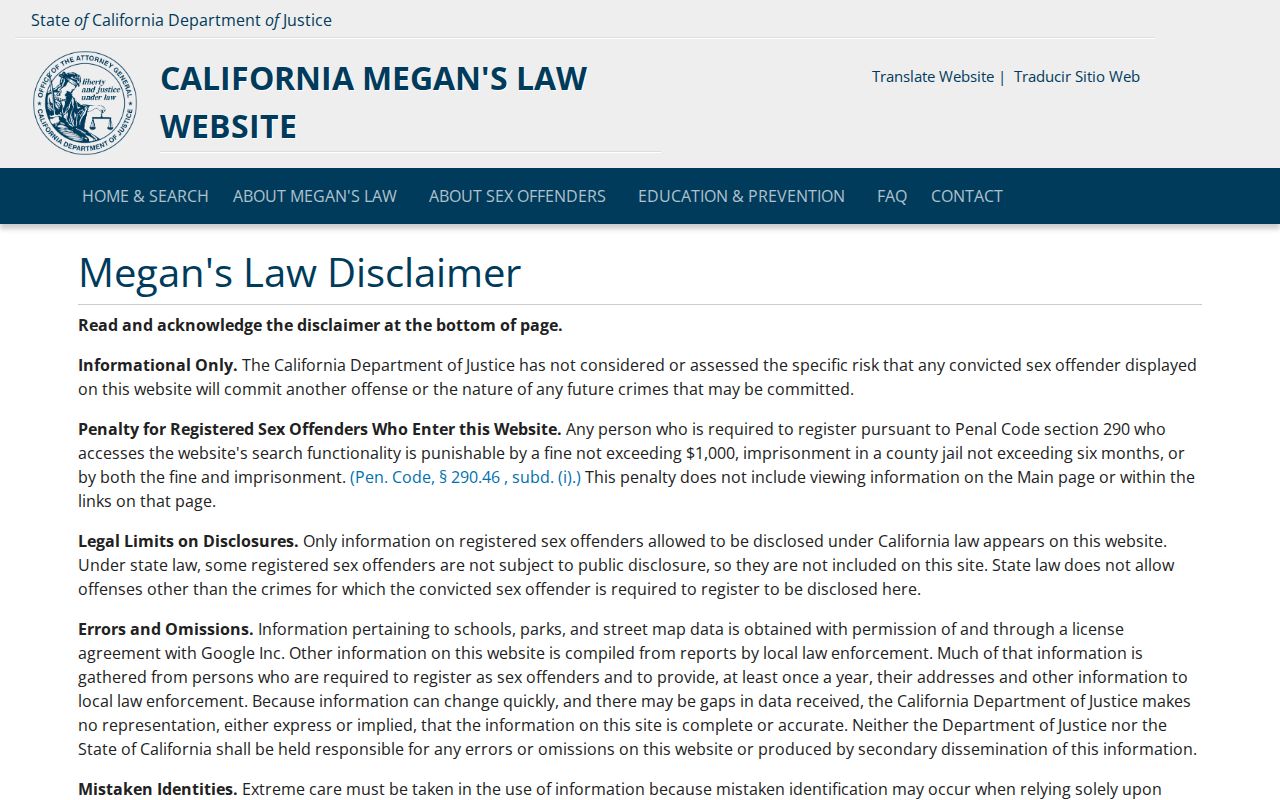
The Megan's Law image illustrates a distinct state registry. It should be read under the site's stated lawful-use limits and never merged with assessor, voter, directory, or community records to make a private profile.
Privacy Limits on Redondo Neighbors
Some gaps are built into the record system. Non-owner occupants, household members, utility customers, delivery data, ballot choices, and DMV address information are not public parcel fields. The federal Driver's Privacy Protection Act restricts DMV personal information. Public recorded copies also truncate Social Security numbers. A missing name can reflect protection, omission, or a source limit rather than vacancy.
| Source kind | Strongest lawful use | Main limit |
|---|---|---|
| Official assessor and map records | Confirm parcel geometry, situs, and dated property facts | A parcel is not a household; owner-name visibility is not verified |
| City permits and public files | Confirm work, public applicants, and civic documents | Not a complete resident roll; historical coverage has gaps |
| RBPL and LOC directories | Find a listed person or subscriber in a held year | Unlisted people and missing years remain unknown |
| Authorized voter records | Use registration information for a permitted purpose | No open browse of everyone on a block |
| Commercial people-finder category | At most, a lead for lawful personal research | May be stale, merge namesakes, or show an old address |
California's Delete Request and Opt-out Platform, or DROP, launched January 1, 2026, and began broker deletion processing in August 2026. A resident can verify residency and submit names, prior names, birth date, ZIP codes, email, phone, and optional device identifiers. Entries are hashed, brokers check at least every 45 days, and public-record-derived data may be exempt.
The California DROP portal is the official starting point for that broker request.
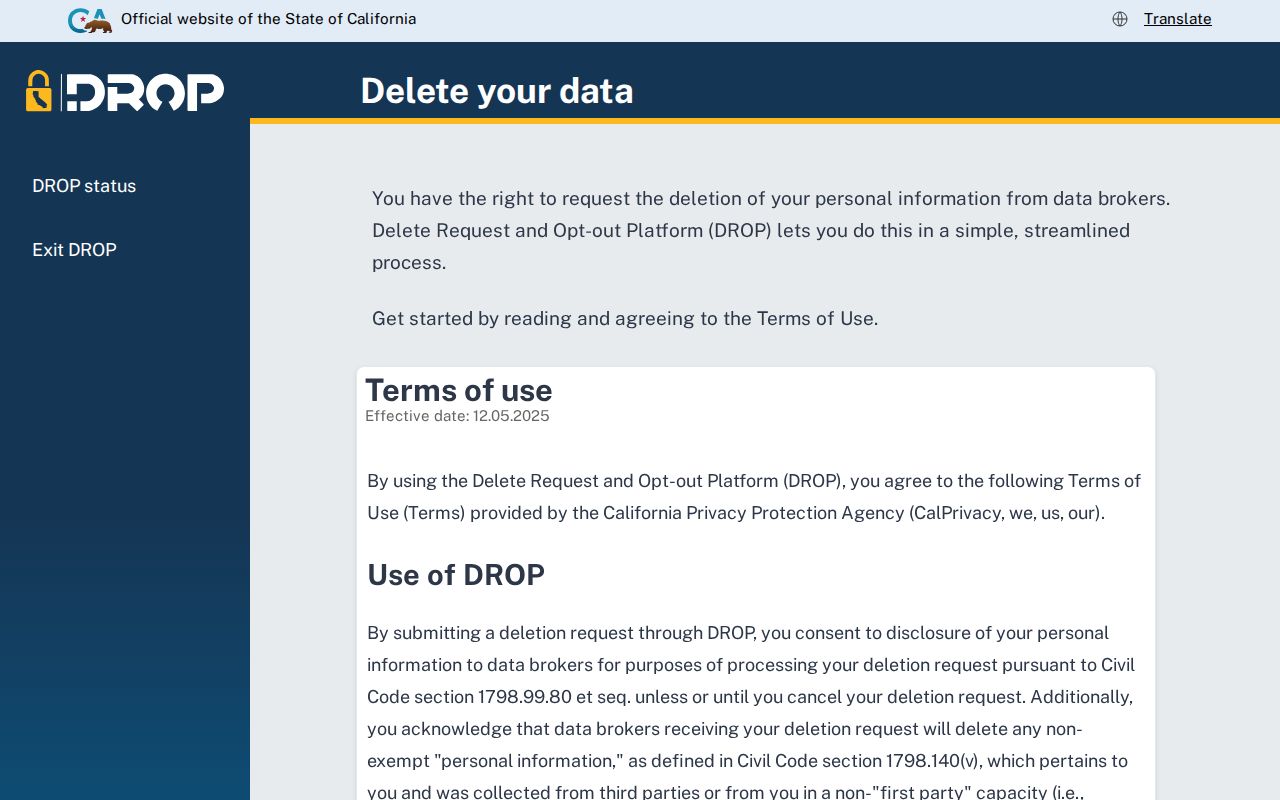
The DROP image shows an opt-out channel aimed at compiled data held outside the county's original record systems. Deleting a broker entry does not erase a deed, court file, map, or other source record at its custodian.
Safe at Home supplies a substitute mailing address for qualifying survivors and participants, but it does not erase old public records. Government Code §6209.5 permits the substitute address in certain deeds and ownership filings. Civil Code §5216 lets Safe at Home participants require an HOA to redact their name, property address, and email from directories, mailbox listings, keypads, and portals.
The California Safe at Home questions and answers explain that confidentiality route.
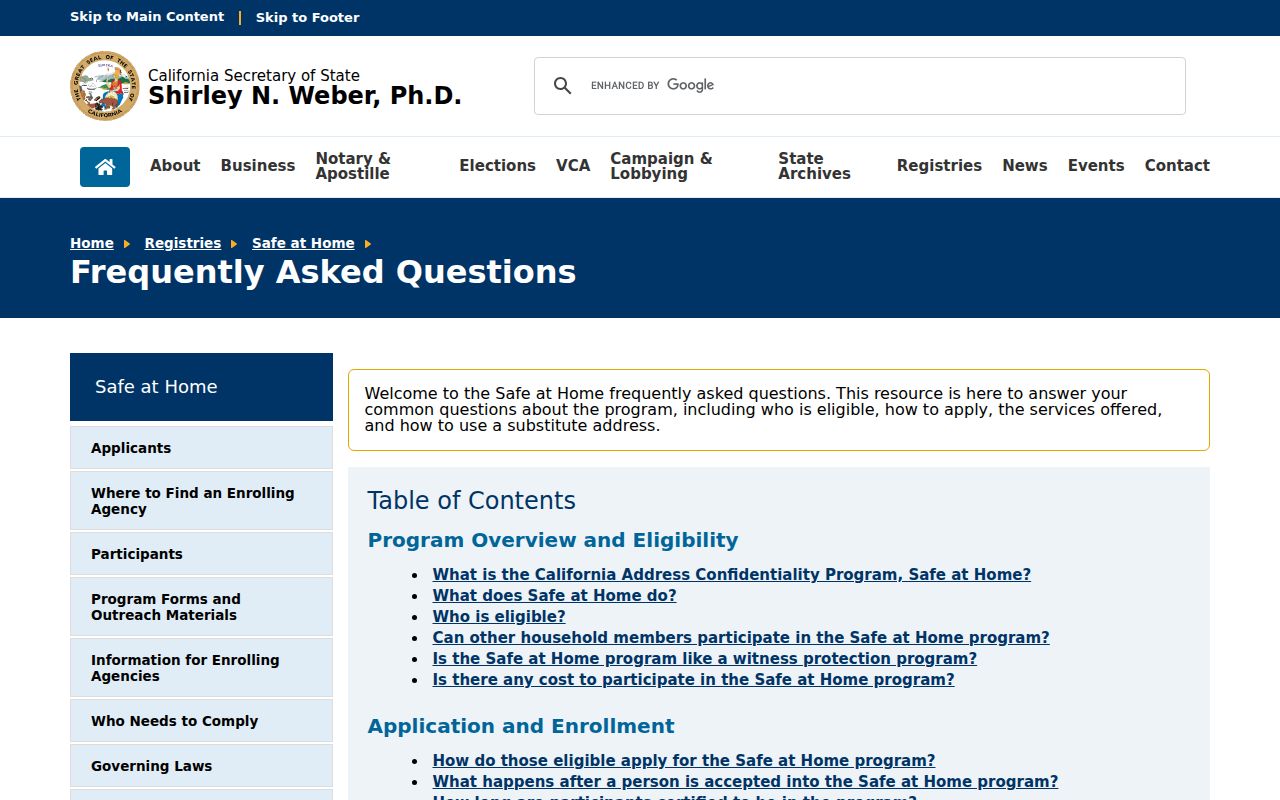
Safe at Home protection is one reason a nearby person may not appear in a community directory or public address trail. Respect that absence. It is not an invitation to infer a hidden identity from another source.
Lawful neighbor research. A Redondo Beach neighbor lookup can support block geography, reconnecting, civic awareness, and personal safety. Do not use records to follow, watch, threaten, intimidate, or harass anyone. California stalking and harassment rules, voter-file limits, and Megan's Law notices all require lawful use.
For a sound conclusion, state exactly what the record proves: adjacent parcel, listed subscriber, public official, dated permit party, or authorized registration record. Do not convert one of those labels into a claim about a living person without independent, current evidence and a lawful reason to use it.