
Redondo Beach Resident Lookup Sources
A one-person resident lookup moves across several record systems because each keeper answers a different question. The Los Angeles County Assessor Portal searches an AIN or address, not a public owner name, and returns parcel facts tied to a situs. The Registrar-Recorder/County Clerk holds real-estate instruments from 1850 to the present, but its request route needs party names and a recording year. The court index, vital-record office, business registry, and license boards are more useful when the starting clue is a name.
| Record | What It Confirms | Where | Access |
|---|---|---|---|
| Assessor parcel | Situs, AIN, parcel facts, assessed ownership context | LA County Assessor Portal | Free address or AIN search |
| Recorded document | Named grantor, grantee, recording date, legal description | LA County RR/CC | Name and year request; paid copy |
| Court case | Litigant, case type, filing date, courthouse and case number | LA Superior Court | Case number free; party name paid |
| Vital record | Birth, death, public marriage, or dissolution event | LA RR/CC or CDPH | Informational or eligible authorized copy |
| Voter status | A person's own registration status | California and LA election tools | Personal verification; file access is purpose-gated |
| Business filing | Entity, agent, filing address, status, and documents | California bizfile | Free search and filings; basic results cap at 500 |
| Professional license | Credential status, license number, and public discipline | DCA and licensing boards | Free public verification |
| Unclaimed property | Name and address reported by a holder | California SCO | Free search; claim proof still required |
Choose the first source by the clue in hand. A known address points to the assessor and parcel map. A known case number points to the court's free access form. A possible family event points to vital records, while a former classmate may be easier to distinguish in a yearbook. A business connection can lead to an entity or license record, but an address printed on a filing is an address of record, not proof of a home.
Verify One Redondo Beach Resident
Namesakes are the main risk in a resident lookup. A full name may fit several people in Los Angeles County, and an old address may belong to an owner, a listed subscriber, or a business. Start with two clues that can be checked apart from the name. An approximate age, middle initial, former address, parcel, school year, case number, entity number, or professional license can keep a correct record attached to the correct person.
- Write down the strongest identity clues and preserve the spelling, initials, prior surname, and approximate date before searching.
- Use the LA Assessor Portal by address or AIN, then note the situs, ten-digit AIN, tract or lot, and parcel facts. The AIN is displayed in a four-three-three format.
- Use the LA Superior Court Access a Case service when a case number is known. If only a name is known, compare variants in the paid party-name service.
- Check a second custodian, such as a vital index, business filing, license record, yearbook, or probate docket. Match a date, place, co-party, entity number, or other independent clue.
- Order a certified copy from the clerk or records office only after the index match is sound. Keep the record type and its access limits with the result.
- Docket
- A court's ordered history of filings, hearings, parties, and case events. A docket entry is not the whole court file.
- Index versus image
- An index is a short searchable record of fields. An image is a scanned page or filing, often subject to a separate fee and access rule.
- Certified copy
- A copy issued with the custodian's certification that it is a true record. A downloaded image or informational copy is different.
The court party-name service distinguishes a searchable index from purchasable images. The same discipline applies to vital records. A record that fits the name but conflicts with the date or place is a lead, not a verified identity.
The official court FAQ is the best source for the paid name-search workflow and document-image limits.
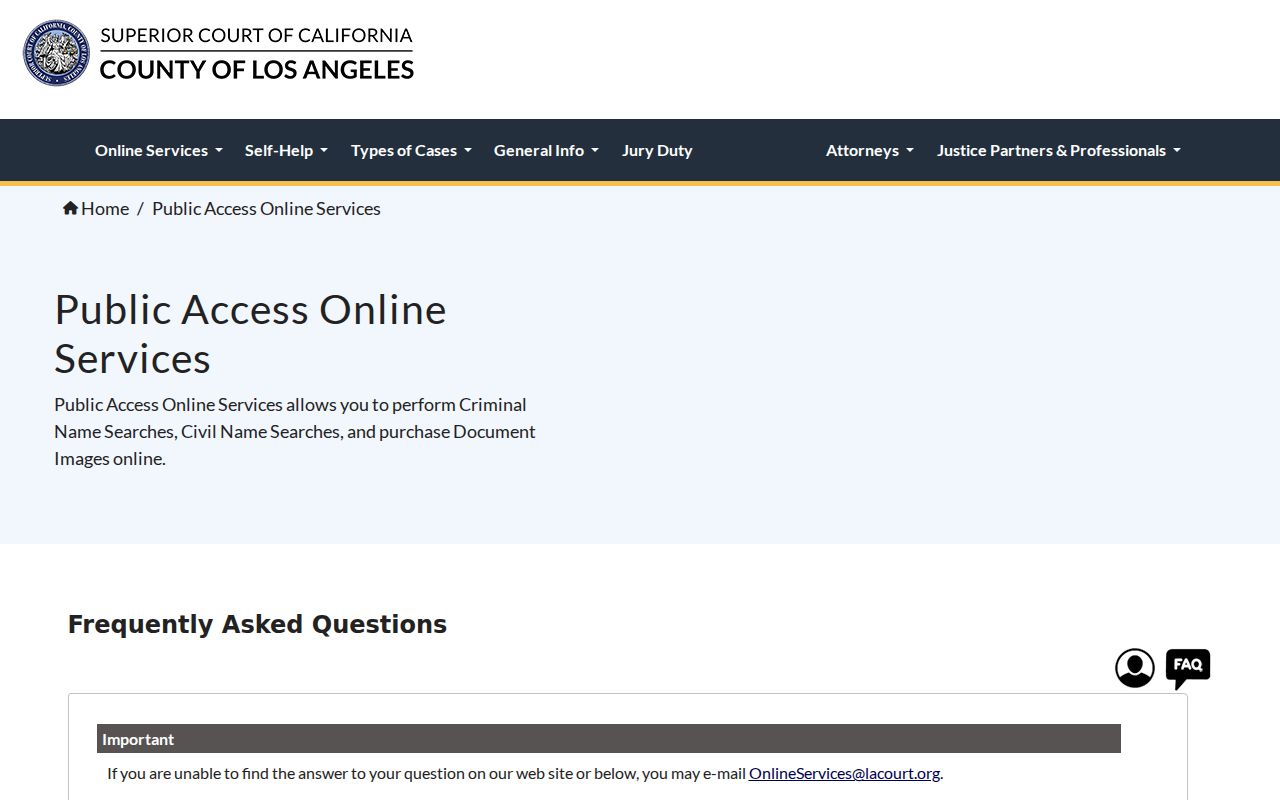
That distinction prevents a docket summary from being mistaken for a complete, certified court file.
Redondo Beach Court Party Search
For Redondo Beach ZIP codes 90277 and 90278, the assigned LA Superior Court location is the Inglewood Courthouse. Torrance also handles applicable civil, criminal, family, and traffic matters, while probate is centralized by the Los Angeles Superior Court. Start with the court's free case-number or calendar access when that number is already known. A party-name search is a paid service, and a charge can apply even when no match appears.
| Result field | What it tells the researcher |
|---|---|
| Case number | The court identifier used for later access and clerk requests. |
| Litigant | The party name returned by the court index, including a possible namesake. |
| Case type | The class of matter, such as civil, family, probate, small claims, or criminal. |
| Filing date | The date that helps compare a court event with a person's known timeline. |
| Courthouse or location | The filing or hearing location, useful for separating similar names and jurisdictions. |
| Case number and images | The case number plus the count of purchasable images when that case class has image coverage. |
The court FAQ documents image coverage by case class. Unlimited civil images at Stanley Mosk begin March 15, 2000; limited civil begins January 1, 1970; small claims begins January 21, 1988; family begins May 1, 2000; and probate begins January 1, 2001. Images usually post within 72 hours and remain downloadable for 30 days. The dates describe the online image set, not the full age of the court's paper holdings.
Sealed or confidential cases, paternity matters, and cases involving minors are unavailable through the paid name service. Unlawful-detainer information is hidden for the first 60 days and can remain hidden when the defendant prevails. A clerk terminal, the Archives and Records Center, or a certified clerk copy is the fallback when the web result is incomplete. Web data is not the official record, so preserve the case number and ask the filing clerk for the record needed.
Note: A court match establishes a party or case connection, not a current Redondo Beach residence or a complete personal history.
Redondo Beach Vital Copy Rules
Vital records answer a narrow life-event question. Los Angeles County RR/CC holds birth records from 1866 forward, death records from 1877 forward, and marriage records from 1852 forward. The California Department of Public Health provides statewide services from July 1905. California has no general rule that turns every older record into an unrestricted public copy. An informational copy can document an event for research, while an authorized copy requires the relationship and identity eligibility in Health and Safety Code sections 103525 and 103526.
| Record type | Coverage and access rule |
|---|---|
| Birth | County 1866 forward and state July 1905 forward. Authorized copies require an eligible relationship and the required declaration. |
| Death | County 1877 forward. Informational copies are available; authorized access follows the statutory class and purpose. |
| Public marriage | County marriage records begin in 1852. A public informational copy is different from a certified identity document. |
| Confidential marriage | Limited to the spouses or a court order under Family Code section 511. |
| Adoption or sealed original | Not an open index. A court order or the official adult-adoption route is required. |
County online orders use VitalChek, add vendor handling, and take about 20 business days. The county figures documented in the records material are $34 for a birth copy, $26 for a death copy, and $19 for a marriage copy. A no-record result does not refund the search fee. The California Vital Records hub explains the state route, and the VS111 birth application shows the informational and authorized choices.
Read the form before ordering. The VS111 asks for the registrant's name, birth place and date, parents including birth surnames, the applicant's relationship, contact information, reason, copy count, payment, and a sworn statement. An authorized copy requires notarization. The state form is a mail route when the CDPH service calls for a paper application. Adoption originals remain sealed unless a court makes them available, and adult adoptees or qualifying relatives should use the official CDSS mutual-consent route rather than an open-public search.
Note: An informational vital copy can support family history, but it is marked as not valid for establishing identity.
Pilot Yearbooks for Redondo Beach Namesakes
A former classmate or relative may be easier to separate from a namesake in a yearbook than in a current index. Redondo Beach Public Library holdings include The Pilot for 1915, 1916, and 1923 through 2025, with an explicit gap from 1917 through 1922. Aviation High School's Talon covers 1959 through 1982. Search the printed index, class pages, clubs, sports, advertisements, and photographs. Preserve the exact name and page number, because an activity or photograph can distinguish two people with the same surname.
A yearbook entry proves participation in a school community during a named year. It does not supply a current address or prove that a later record belongs to the same person. Pair the school year with a newspaper notice, a dated directory listing, a probate clue, or a professional record. For older address work, the Redondo Beach city directory collection provides the historical shelf, while a resident lookup should keep its focus on matching one person across independent evidence.
The declared Pilot gap matters. Absence from 1918 or 1921 is not proof that a student was absent from Redondo Beach; it may simply reflect a missing volume. That is a useful human-history check when a name search seems to end without an answer.
Redondo Beach Business and License Records
Business and professional registries can confirm a public affiliation without turning an address of record into a residence claim. California bizfile searches by entity name or file number. Basic results are capped at 500, while advanced controls include entity type, status, initial filing date range, and a begins-with choice. Results can show the entity number, formation or registration date, standing, jurisdiction, street and mailing addresses, agent for service, Statement of Information due date, and filing PDFs. Search spelling variants and preserve the entity number before treating a name as a match.
The California Department of Consumer Affairs search adds board, license type, name, and location fields. A license number, status, issue or expiration detail, and public discipline can be useful identity clues. The displayed address is a practice, mailing, or other address of record. It is not proof of where a person sleeps. County fictitious-business-name filings can add a local trade name when an entity search is silent.
The California Medical Board verification service is a focused source for a physician's public license status and discipline.
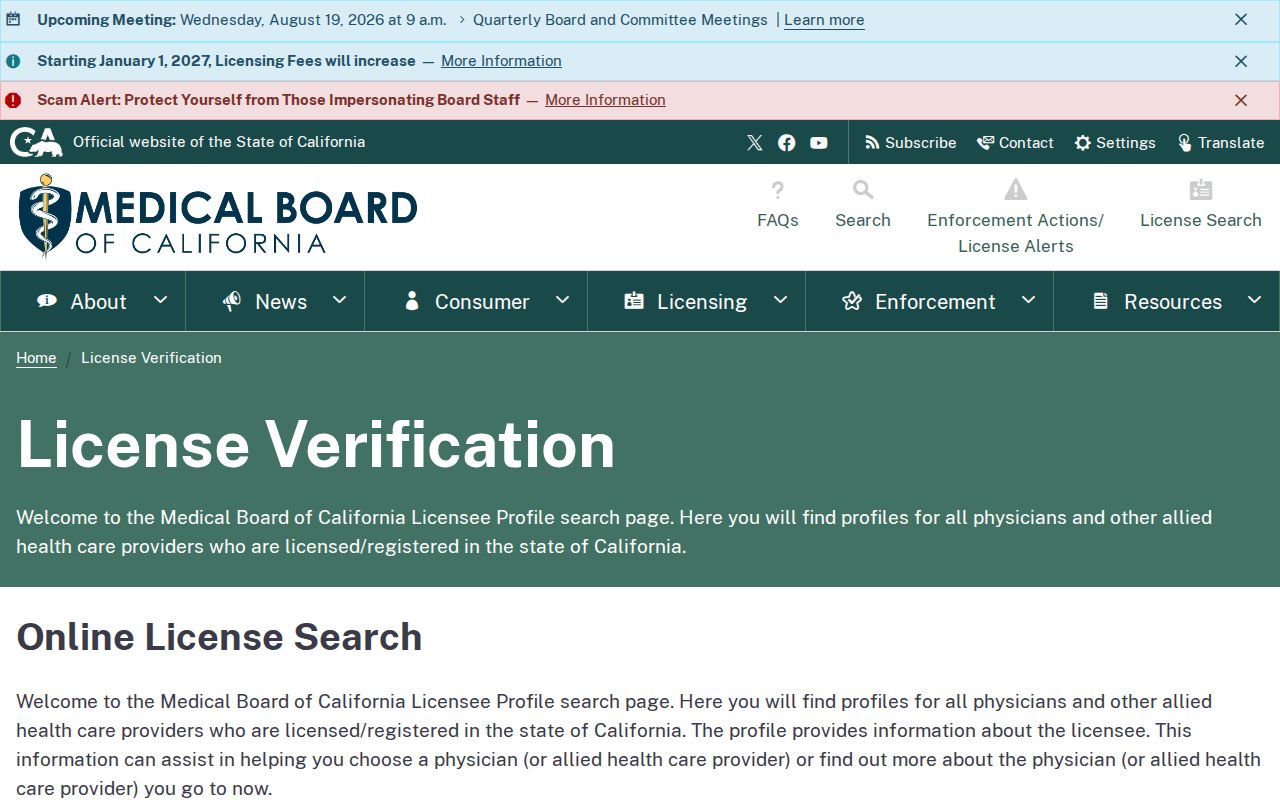
The board result is strongest when its license details agree with the person's name, time period, and another independent clue.
The State Bar of California licensee search offers a separate check for attorney status and discipline.
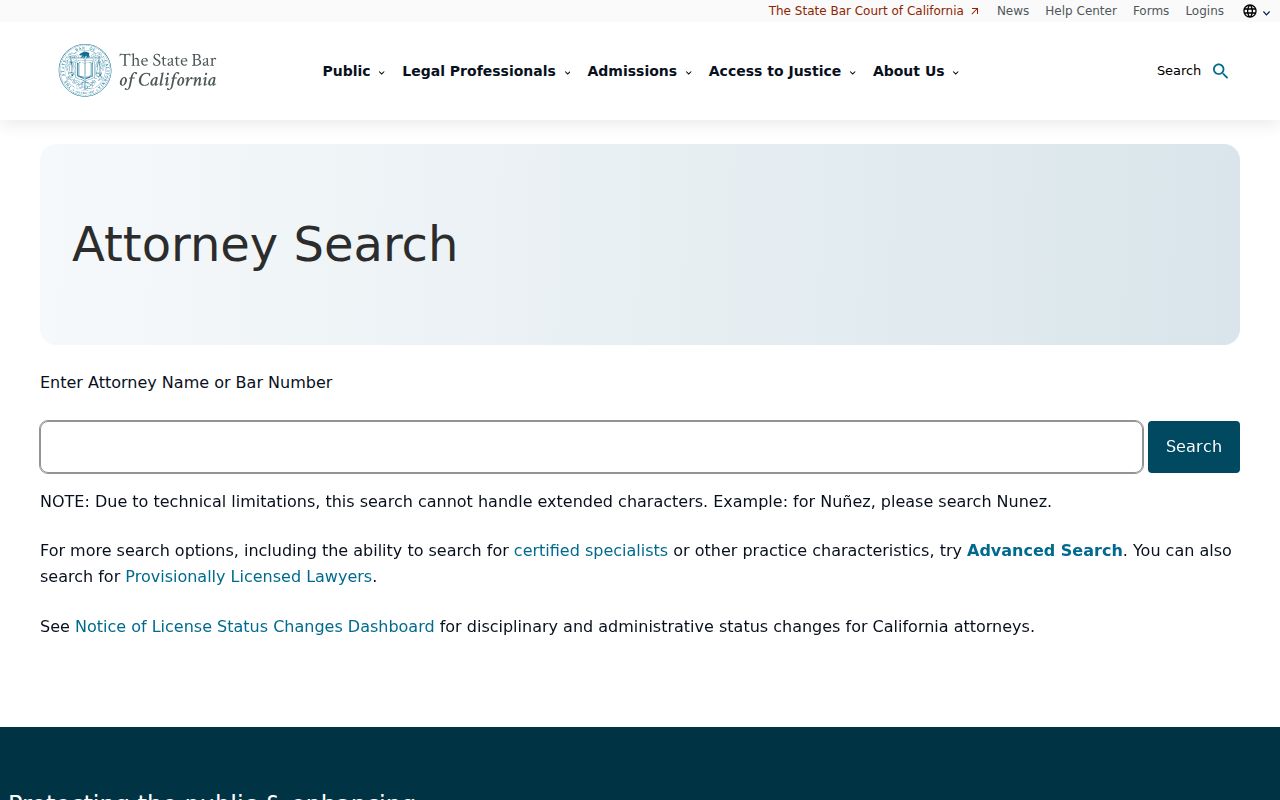
That record identifies a regulated license relationship, not a complete biography or current home location.
The Board of Registered Nursing verification page supplies the comparable nursing credential route.
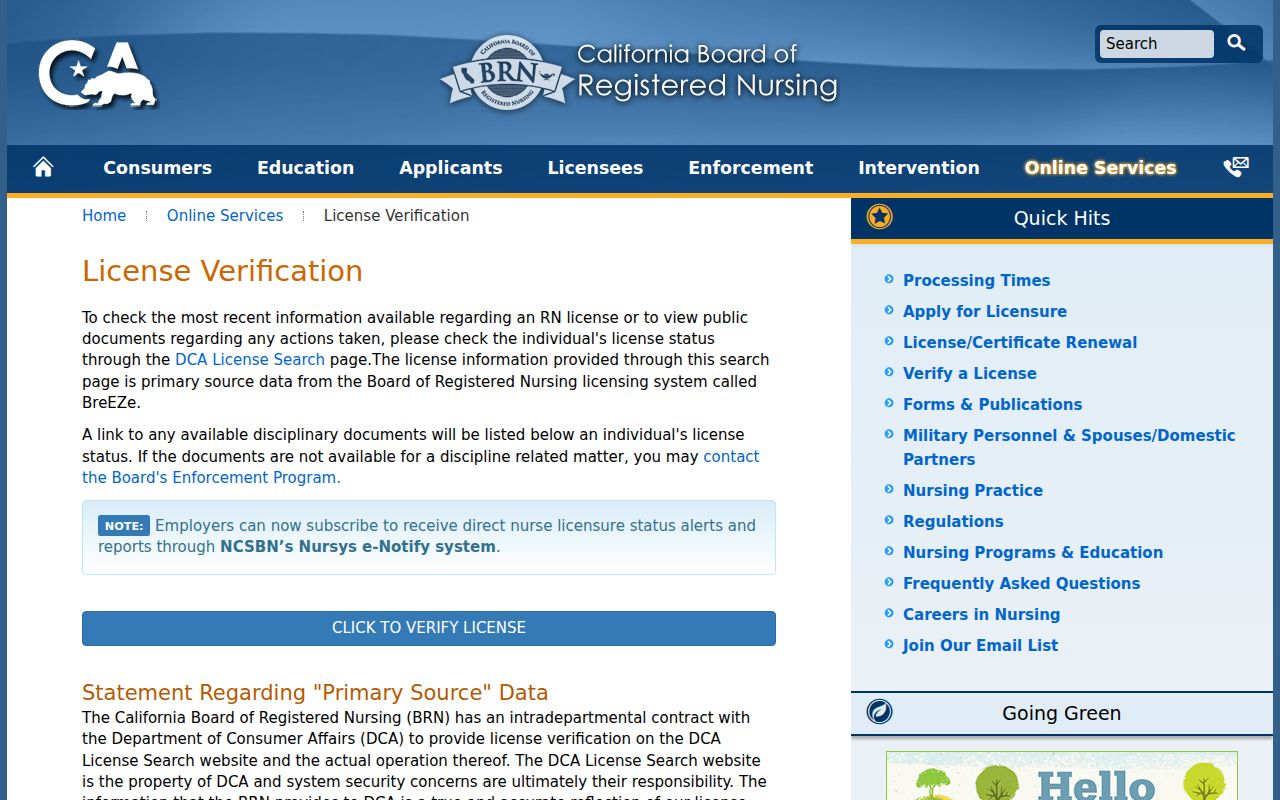
Using the license number and status date helps keep a professional record tied to the right namesake.
Redondo Beach Heir Search Through Probate
Probate is a useful human-use path when the person being traced is deceased or an estate question needs a named fiduciary. LA Superior Court probate is centralized, so a Redondo address does not create a separate city probate index. A probate file may identify a petitioner, executor, interested relative, or estate address, subject to redactions and the file's availability. Match the decedent to a death record, deed, newspaper notice, or dated directory before treating a same-name petition as the right estate.
California's State Controller unclaimed-property search adds a different official lead. Its fields include Name, Address, City, and Property number, plus a less-specific-match option and a reCAPTCHA step. The Controller also publishes an Estates of Deceased Persons spreadsheet updated in April and October. The spreadsheet can list a decedent, reported heirs, property ID, and balance. It is a lead for a claim or probate review, not proof that a person now lives at the listed address.
The State Controller unclaimed-property search shows the public search route used for a name or estate clue.
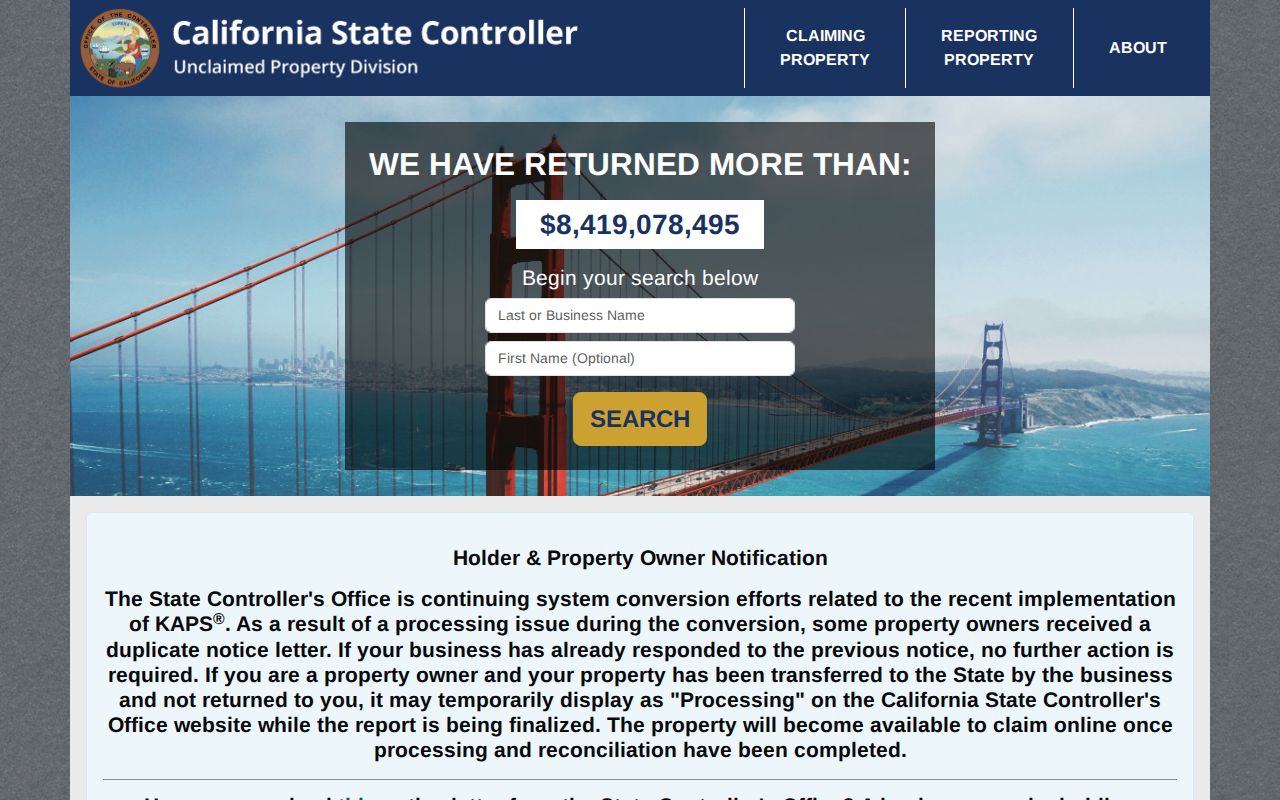
The search result can point toward a claim, while probate and vital records supply the proof needed to connect an heir to the correct decedent.
Redondo Beach Records Request Fallback
When a portal ends, send a focused request to the office that created or holds the record. The California Public Records Act applies to any person. Under Government Code section 7922.535, an agency normally makes a determination within ten calendar days and may take a written extension of up to 14 days for unusual circumstances. Inspection is free; duplication can carry a direct cost or a statutory fee. A request should name the department, record type, date range, address or case number, and preferred inspection or copy method.
The Los Angeles County public-records request routing page helps direct a request to the correct custodian. Redondo Beach's City Clerk receives municipal requests for permits, licenses, agendas, correspondence, and other city-created records through its online or paper form. The city form asks for a description, requester contact details, signature, and date. A city request is a fallback for a city file, not a way to force a county court, vital, voter, juvenile, sealed, or DMV record into disclosure.
A narrow request is easier to answer than a demand for every document about a person. If a search returns no record, keep the response and ask whether the gap is a search limit, a redaction, a retention issue, or a statutory exemption. Do not convert silence from one office into proof that the person or event never existed.
Redondo Beach Voter Checks Stay Personal
The California My Voter Status tool and the Los Angeles County voter-status tool are personal verification services. A voter can check their own registration, but neither is a public name-and-address directory for a third party. Full voter files are purpose-gated under Elections Code section 2194. Allowed users can include election, scholarly, journalistic, political, and governmental requesters who document a specific lawful purpose and security plan. Personal, private, commercial, advertising, solicitation, marketing, internet-display, and harassment uses are prohibited.
State file requests require a signed application and can ask for a full name, date of birth, county, residence address, purpose, supporting documentation, security plan, identification, and a perjury declaration. The application uses a wet signature and is submitted in person or by United States mail, not email or fax. The research record lists a $100 statewide file fee. Specific records can cost $30 each up to $100 and require identifying details. LA County rates documented in the same material include $146 countywide, $54 for a precinct, district, or city, and $39 for an added file, delivered on CD. A delivered file can contain registration and precinct details, but optional history shows how and when a ballot was cast, never the ballot choice.
The California voter-status lookup is therefore useful for personal verification, not for building a public Redondo Beach resident list. Confidential voters and Safe at Home participants receive additional protection, and the federal Driver's Privacy Protection Act limits DMV address data.
Note: A voter-status result is a protected verification channel, not permission to search every name at a Redondo Beach address.
Limits on a Redondo Beach Resident Lookup
Privacy rules explain why a careful resident lookup sometimes ends with a gap. The California Consumer Privacy Act, Civil Code section 1798.100 and following, gives covered people rights to know, correct, delete, opt out of sale or sharing, limit sensitive-data use, and receive equal treatment. Government public-record information is outside the covered personal-information definition in important ways. A deletion request to a data broker cannot erase a deed, court file, or vital record held by its official custodian.
California's Delete Request and Opt-out Platform, called DROP, began broker deletion processing on August 1, 2026, after the platform launched January 1, 2026 under the Delete Act and SB 362. A requester verifies residency and can submit current and prior names, date of birth, ZIP codes, email, phone, and optional advertising or device identifiers. Entries are hashed. Brokers check at least every 45 days and report outcomes such as deleted, exempted, not found, or pending. Public-record-derived data may be exempt. The California DROP portal is the official starting point for that privacy request.
Safe at Home provides a substitute mailing address for survivors of domestic violence, stalking, sexual assault, trafficking, child abduction, elder or dependent-adult abuse, and qualifying reproductive-health or public-entity participants. It does not delete old records. The Secretary of State Safe at Home FAQ explains the program. Public records also truncate Social Security numbers, and the federal DPPA restricts DMV information.
Lawful personal use. A Redondo Beach resident lookup belongs to personal, lawful research such as family history, reconnecting, civic review, or an estate question. Using records to stalk, harass, threaten, intimidate, or harm a person can violate California law and can support a civil protection order.
Penal Code section 646.9 addresses stalking, Penal Code section 653m addresses certain harassing communications, and Code of Civil Procedure section 527.6 provides a civil-harassment restraining-order route. Stop when the record is protected, keep uncertainty visible, and verify important facts with the custodian rather than exposing a private person.